| dc.contributor.advisor | Štorek, Josef | |
| dc.contributor.author | Ščerbová, Nikola | |
| dc.date.accessioned | 2021-12-03T12:23:15Z | |
| dc.date.available | 2021-12-03T12:23:15Z | |
| dc.date.issued | 2011 | |
| dc.date.submitted | 2010-08-16 | |
| dc.identifier.uri | https://dspace.jcu.cz/handle/20.500.14390/20025 | |
| dc.description.abstract | Diplomová práce nese název: Zajištění psychologické pomoci a krizové intervence civilnímu obyvatelstvu při mimořádné události.
Teoretická část je především zaměřena na zmapování rozvoje a stavu systému psychosociální pomoci v ČR, včetně jednotlivých subjektů a organizací, které poskytují pomoc na zasažených místech.
Výzkum je založen na podkladě kvalitativního a kvantitativního šetření. Kvalitativní část byla realizována prostřednictvím nestrukturovaného interview s definovaným klinickým psychologem a hlavním psychologem HZS Karlovarského kraje. Touto formou jsem plnila cíle práce 1. Popsat strukturu a funkčnost systému psychologické intervence, 2. Posoudit připravenost odborníků poskytnout pomoc obětem mimořádné události. Metoda kvantitativního šetření zahrnovala sběr dat od náhodného vzorku 150 občanů, kteří se touto formou vyjadřovali k dané problematice krizové intervence a psychické pomoci z vlastního úhlu pohledu. Výzkum probíhal v Karlovarském kraji.
Struktura systému psychosociální pomoci vzniká roku 1997, kdy se této problematice začíná věnovat pozornost jak ze strany státních orgánů, neziskových organizací tak i komerčních institucí. Stěžejním státním orgánem v řízení a koordinaci systému psychosociální pomoci je Ministerstvo vnitra, které má vypracovaný systém posttraumatické intervenční péče ve vztahu k zasaženým občanům i ve vztahu k zasahujícím jednotkám, dále rozvíjí spolupráci s IZS a zahraničními subjekty.
Nedílnou součástí výzkumu jsou výsledky dotazníkového šetření. Civilní obyvatelstvo má základní informace o psychické pomoci, kterou hodnotí jako významný faktor pro zvládnutí psychicky náročné situace. Tato diplomová práce je strukturována tak, aby poskytla čtenáři ucelený přehled aktuálního stavu psychosociální pomoci. Prací chci také upozornit na chybějící odbornou posttraumatickou intervenční péči ve zdravotnickém sektoru. | cze |
| dc.format | 85 s., 7 s. obr. příloh | |
| dc.format | 85 s., 7 s. obr. příloh | |
| dc.language.iso | cze | |
| dc.publisher | Jihočeská univerzita | cze |
| dc.rights | Bez omezení | |
| dc.subject | mimořádná událost | cze |
| dc.subject | krizová intervence | cze |
| dc.subject | první psychická pomoc | cze |
| dc.subject | psychosociální pomoc | cze |
| dc.subject | stres | cze |
| dc.subject | emergency situation | eng |
| dc.subject | crisis intervention | eng |
| dc.subject | first psychic help | eng |
| dc.subject | psychosocial help | eng |
| dc.subject | stress | eng |
| dc.title | Zajištění psychologické pomoci a krizové intervence civilnímu obyvatelstvu při mimořádné události | cze |
| dc.title.alternative | Providing psychological aid and crisis intervention for the civilian population during an emergency situation | eng |
| dc.type | diplomová práce | cze |
| dc.identifier.stag | 17068 | |
| dc.description.abstract-translated | This diploma thesis bears the title: Providing psychological aid and crisis intervention for the civilian population during an emergency situation.
The theoretical part aims to survey the development and present state of psychosocial aid system in the Czech Republic, including individual subjects and organisations that provide help in places affected.
The research is based on qualitative and quantitative surveys. The qualitative part was realised by means of a non-structured interview with a defined clinical psychologist and the main psychologist of the Fire Rescue Service of the Region of Karlovy Vary. I have fulfilled the objectives of my thesis in the following way: 1. to describe the structure and functionality of the psychological intervention system, 2. to assess experts’ readiness to provide aid to victims of an emergency situation. The quantitative survey method included collecting data from the randomly chosen samples of 150 citizens who thus expressed their opinions of the questions of crisis intervention and psychological aid, from their own point of view. The research was conducted in the Region of Karlovy Vary.
The structure of the psychosocial aid system came into being in 1997, when these questions started to be given more attention both from state authorities and non-profit-organisations, and commercial institutions. The fundamental state body that manages and coordinates the psychosocial aid system is the Interior Ministry, which has a post-traumatic intervention care system, elaborated in relation to citizens affected and in relation to intervening units, and that cooperates with the Integrated Rescue System (IZS) and foreign subjects.
The results of the questionnaire survey are an integral part of my research. The civilian population has basic information about psychological aid, which they assess as an important factor for mastering mentally demanding situations. This diploma thesis is structured in such a way that provides the reader with a complex overview of the current state of psychosocial aid. I also aim, by means of my thesis, to point out the fact that there is no professional post-traumatic care in our health care system. | eng |
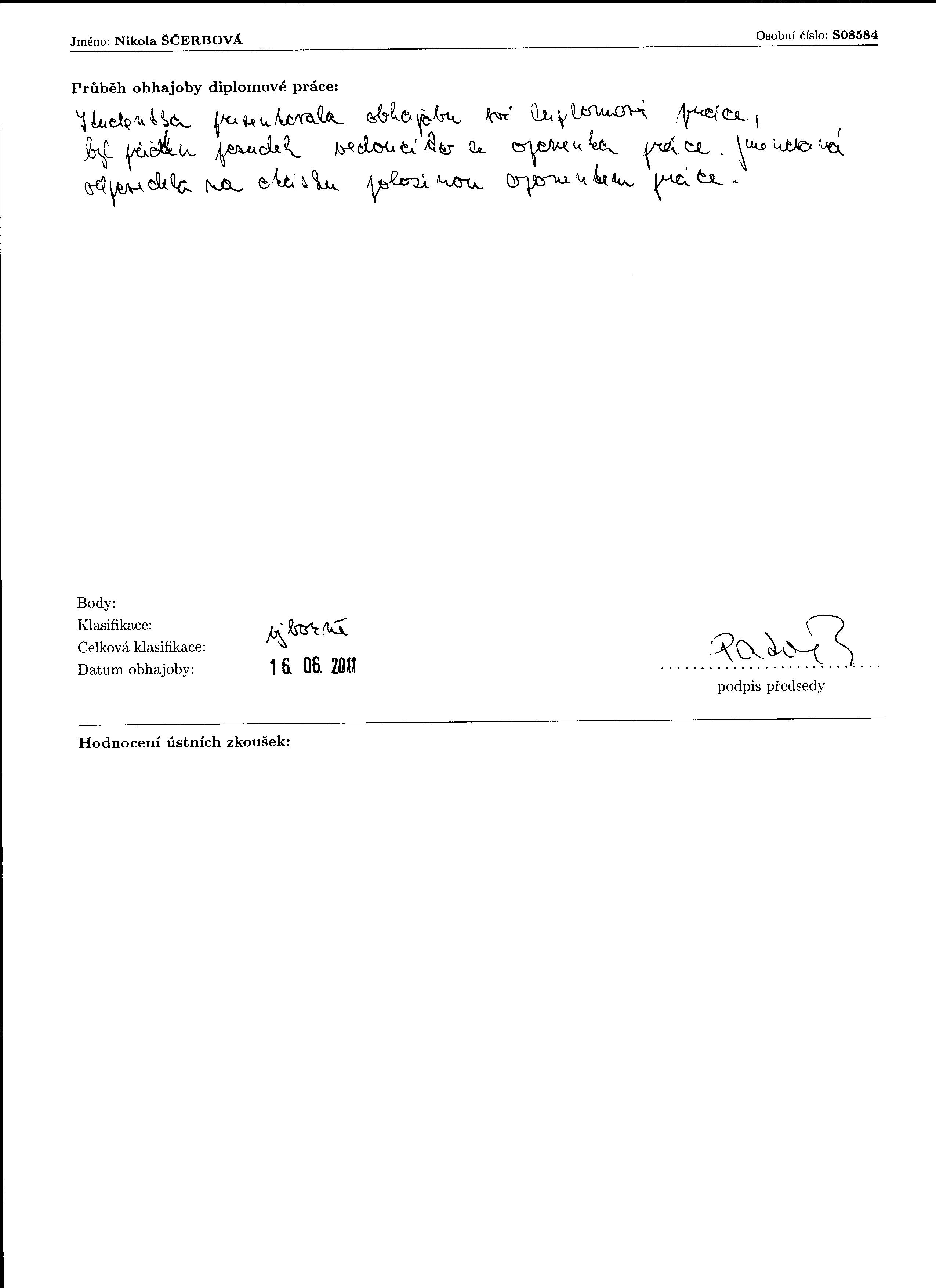
| dc.date.accepted | 2011-06-16 | |
| dc.description.department | Zdravotně sociální fakulta | cze |
| dc.thesis.degree-discipline | Civilní nouzová připravenost | cze |
| dc.thesis.degree-grantor | Jihočeská univerzita. Zdravotně sociální fakulta | cze |
| dc.thesis.degree-name | Mgr. | |
| dc.thesis.degree-program | Ochrana obyvatelstva | cze |
| dc.description.grade | Dokončená práce s úspěšnou obhajobou | cze |
| dc.contributor.referee | Pytel, Libor | |